Basements · Seasonal
Is your basement ready for winter? 12 checks before the ground freezes
What to check outside, inside and on the safety list before winter in Algonquin, Crystal Lake, St. Charles, Geneva and Vernon Hills, and when each check needs a pro.
A basement gets ready for winter in October, not January. Most of the 12 checks below need a walk around the house and a flashlight. Three happen outside before the ground freezes, four are warning signs inside that get expensive if they are ignored, and five are safety and legal basics, two of them Illinois law.
The timing is close for homes in Algonquin, Crystal Lake, St. Charles, Geneva and Vernon Hills. The National Weather Service's normal first freeze is October 13 at Rockford and October 19 at O'Hare, based on 1991 to 2020 normals (National Weather Service). Start outside.
Want it on paper? Download the printable winter basement checklist (PDF, 5 pages): the same 12 checks with boxes to tick, space for notes and every source listed.
What should you check outside before the ground freezes?
- Gutters clear, downspouts carrying water 5 feet out. Rain and snowmelt that land beside the foundation soak the soil against the basement wall. Downspouts should end at least 5 feet from the foundation, and gutters should be clean as winter approaches (Building America Solution Center). Clear them once the leaves are down and reattach any extension that has come loose. Gutters that sag, leak at the joints or overflow when clear are a gutter repair or replacement question.
- Ground sloping away from the house. The 2018 residential code, which Algonquin and Crystal Lake both build to, asks for the ground to fall at least 6 inches within the first 10 feet of the foundation, and for walks and patios within 10 feet to slope away (IRC R401.3; Algonquin, Crystal Lake). HUD's inspection guide notes that settled backfill lets water collect against the foundation wall and get into the basement (HUD Residential Rehabilitation Inspection Guide, part 1, PDF p.17). Fill small low spots with soil before the ground freezes. A yard or patio that drains toward the house is work for a grading or landscape contractor.
- Outdoor faucets and hoses shut down. Outdoor hose faucets are among the pipes that freeze most often. Remove and drain the hoses, close the inside valve that feeds each outdoor faucet, then open the outdoor faucet so the line drains and leave it open (American Red Cross). No inside shutoff, or a leak inside the wall, means a licensed pro for the pipe work.
Which warning signs inside get expensive if ignored?
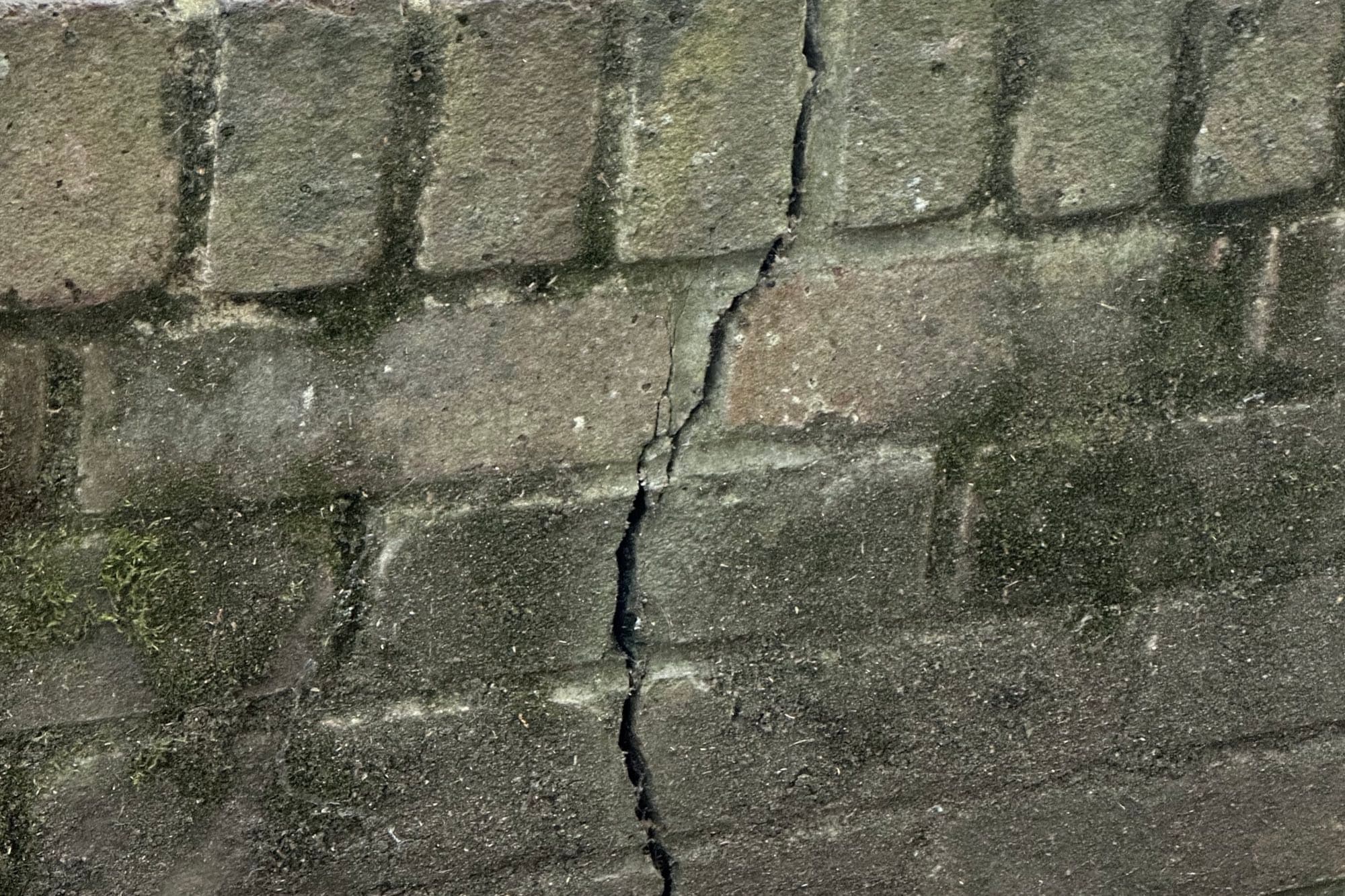
- Foundation cracks, marked and dated. In the exceptionally cold winter of 2013-14, frost ran about 10 to 20 inches deep across Illinois, and it has been recorded as deep as 30 inches in far northern Illinois (Illinois State Climatologist). HUD lists the freezing and heaving of water-soaked soil against the wall among the causes of horizontal cracking in foundation walls, and calls that kind of distress potentially serious (HUD guide, part 2, PDF p.38). Pencil a line at each end of every crack, write the date, and photograph it with a tape measure in the frame. Check the marks again after the thaw. A crack that runs sideways or in a stair-step, or a wall that bows inward, is a question for a structural engineer first. A crack that leaks is a crack repair question, and most crack repair does not have to wait for spring.
- Water signs on the walls and floor. The University of Minnesota Extension lists the signs of a basement moisture problem: water trickling from walls, standing water, a ring of dampness at the base of block walls, damp air, odor, staining, and efflorescence, the white chalky deposit water leaves on concrete (UMN Extension). It names three sources: rain or groundwater, moisture made indoors, and humid air condensing on cool surfaces. Each needs a different fix, so note whether a damp spot follows rain or a thaw, or humid weather. Water that comes back after rain is worth a closer look: why basements leak around Algonquin covers the common ways in.
- Pipes on outside walls protected. Supply pipes in unheated basements and along poorly insulated outside walls are among the most likely to freeze. Fit foam pipe sleeves, keep the heat on, and leave it set no lower than 55 degrees F when you travel (American Red Cross). Find the main water shutoff, usually along a basement wall next to the water meter or where the water line comes in, and shut it off if a pipe freezes or bursts (Missouri Public Service Commission). Never thaw a pipe with an open flame; a pipe you cannot thaw safely is a job for a licensed pro.
- Furnace filter changed, checkup booked. ENERGY STAR advises checking the heating system in the fall and inspecting, cleaning or changing the filter monthly (ENERGY STAR). The U.S. Fire Administration advises a yearly professional inspection and keeping anything that can burn at least 3 feet from heat sources (USFA). Change the filter, clear the space around the furnace, and book the checkup with a heating technician. If the answer turns out to be a new furnace, see repair or replace.
What are the safety and legal basics?
- A smoke alarm on the basement level. Illinois requires every single-family home to have at least one approved smoke detector on every story, basements included, and one within 15 feet of every room used for sleeping. A battery-only alarm that is newly installed, more than 10 years old or failing must have a sealed, long-term battery, unless it is on a monitored system or connects by a low-power wireless signal or Wi-Fi (425 ILCS 60/3). Test alarms monthly and replace them 10 years after the date they were made (USFA).
- A carbon monoxide alarm within 15 feet of every bedroom. Illinois requires at least one approved carbon monoxide alarm within 15 feet of every room used for sleeping (430 ILCS 135/10). Keep furnace, dryer and fireplace vents clear of snow (USFA). If the alarm sounds, leave the house right away and call 911 (CDC).
- A radon test. The Illinois Emergency Management Agency says all homes should be tested, wherever they are (IEMA), and uses the EPA action level of 4.0 picocuries per liter (IEMA). The Illinois Department of Public Health reports that 41 percent of Illinois homes tested were above that level, and that basements tend to read higher (IDPH). A short-term kit in the lowest level you live in is a do-it-yourself job; a result at or above 4.0 calls for a radon mitigation professional licensed by IEMA.
- A way out of every basement bedroom. A new bedroom created in a basement must have its own emergency escape opening (IRC R310.1). Repairing or fixing up an existing basement does not by itself require one (IRC R310.6). Any cover or grille over the opening or its window well must open from inside without a key or tool (IRC R310.4), so keep wells clear of leaves now and snow after each storm. For safety, anyone sleeping in a basement room without one should have a code-sized escape window.
- A permit before any basement project. Algonquin requires a permit before anyone builds, alters, repairs or replaces, or installs electrical, gas or mechanical systems (Algonquin). Crystal Lake exempts only finish work such as painting, tiling, cabinets and countertops (Crystal Lake). In St. Charles, Geneva and Vernon Hills, ask the village building department before work starts.
What can wait until spring?
Anything that needs digging. Regrading a yard or excavating a foundation wall waits for the ground to thaw, because frozen soil is hard to dig and slow to work (why digging waits for spring). The checks above are the ones to do now, before snow and frost cover what you are looking for.
If you are planning to finish the basement this winter, the same order holds: find and fix the water first, then plan the finished space.
Common questions
Does my home need a carbon monoxide alarm if it has electric heat?
Often, yes. The Illinois law exempts a home only if it burns no fuel for heat, ventilation or hot water, is not connected to a garage, and is not close enough to another source of carbon monoxide to be at risk (430 ILCS 135/20). A gas water heater or an attached garage is enough to need one.
Does an unfinished basement need its own smoke alarm?
Yes. The Illinois Smoke Detector Act counts basements as a story, finished or not, and requires an approved smoke detector on every story of a single-family home (425 ILCS 60/3).
Can I test for radon myself?
Yes. The Illinois Department of Public Health says homeowners can test with a kit or hire a licensed professional (IDPH). Follow the kit's directions exactly. To reduce a high level, IEMA recommends a licensed mitigation professional (IEMA).
What should I send with an estimate request?
The town, what you found, where, and when it shows up, plus a few photos. The printable checklist has space for those notes. If something on the list turned up a problem you would rather not handle yourself, tell us what you found.