
House painting in Algonquin, Illinois
Paint holds only as well as the surface under it. Inside or out, we patch, sand, caulk and prime the way the paint’s maker says before the first coat, and we paint outside in the warm months.
Serving Algonquin, Crystal Lake, St. Charles, Geneva and Vernon Hills.
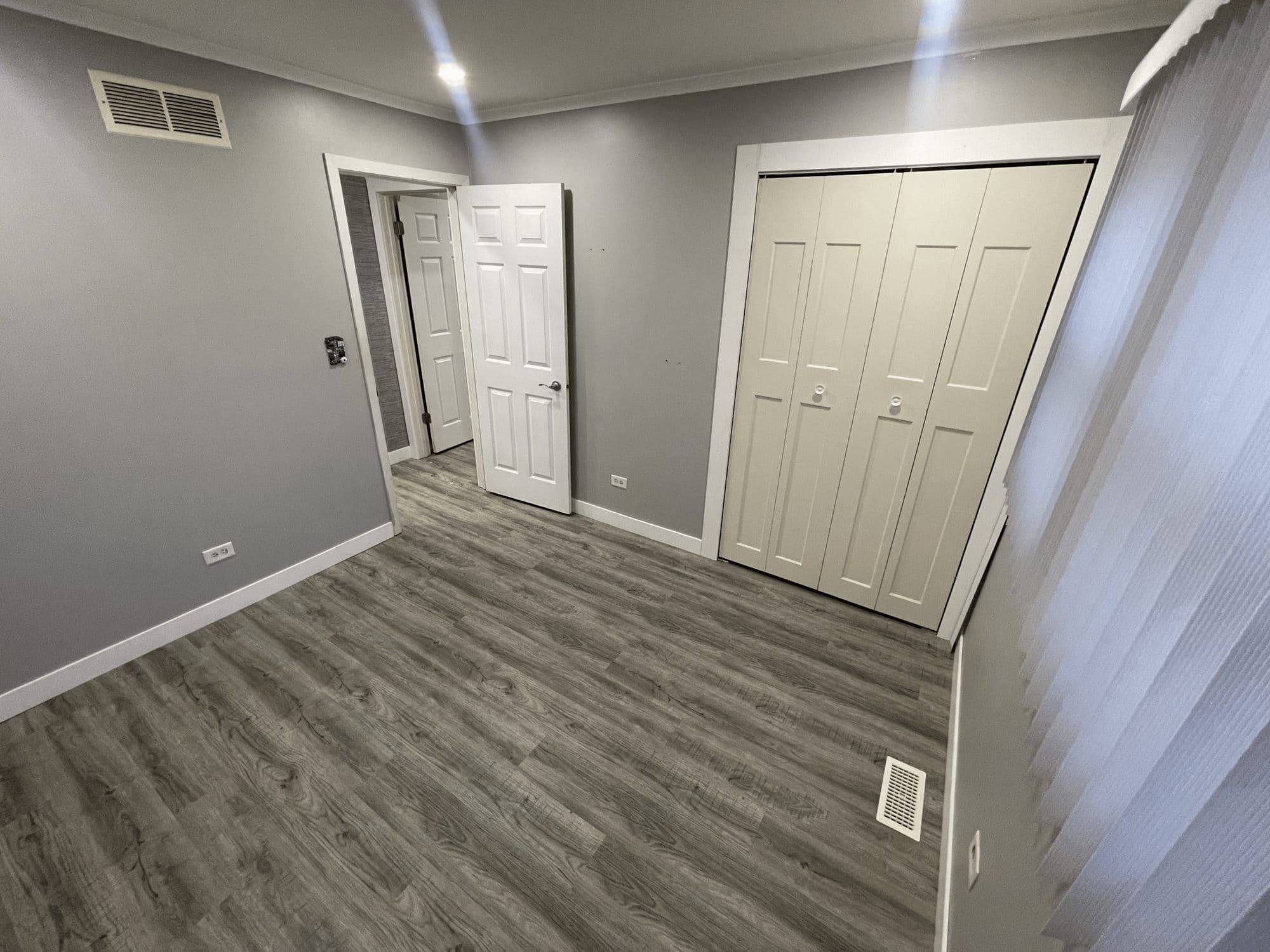
Signs it’s time to repaint
- Scuffs and marks on the walls that won’t wipe off
- Nail holes, dents and hairline cracks in the drywall
- Yellowed or chipped trim and doors
- Paint peeling or flaking outside, around windows and trim
- Bare wood showing on the siding or trim
- Colors that date the house, or you’re getting ready to sell
What’s included
Each part is done by an insured subcontractor holding any license that trade requires, and every surface is prepared the way the paint’s maker says before anything goes on.
Floors and furniture protected
Furniture moved to the middle of the room and covered, and floors covered, before any work starts.
Patching and sanding
Nail holes and cracks filled and sanded smooth, and the sanding dust cleaned off before any paint goes on.
Caulk and primer
Gaps at trim, windows and doors caulked after priming, and primer where the surface calls for it: bare spots, stains and big color changes.
Walls, ceilings, trim and doors
Inside, a whole room or just the parts you choose.
Outside
Siding and trim washed, and loose or peeling paint scraped and sanded back to a sound surface before it’s painted, in the warm months.
Older homes
In a house built before 1978, work that disturbs paint follows the EPA’s lead-safe rules: a certified renovator on the job, the work area contained and cleaned the EPA’s way, and the EPA’s Renovate Right pamphlet before work starts.
How it works
- 1
We look at the surfaces
The walls, trim or siding you want painted, what needs patching, and how the old paint is holding up. That decides the preparation, and the price.
- 2
You get a written estimate
What gets painted, the preparation, the primer and the number of coats, and what each part costs.
- 3
Protect and prepare
Floors and furniture covered, then holes patched, rough spots sanded, gaps caulked and bare spots primed.
- 4
Paint
As many coats as the paint’s maker calls for, put on only within the temperature limits on its data sheet.
- 5
The final walk-through
We go over the finished work with you before it is called done.
How it’s priced
We price painting after we’ve seen it, because the preparation depends on what’s there: holes and cracks to patch, old paint to scrape, and bare spots to prime.
If scraping turns up soft or rotted wood on the trim or siding, we show it to you and price the repair before it’s fixed.
What moves the price
- How many rooms, and how big they are
- Walls only, or ceilings, trim and doors too
- How much patching and sanding the surfaces need
- A big color change, which can need a coat of primer
- Outside: the size of the house, one story or two, and the state of the old paint
You get a written, itemized estimate after we’ve looked, and nothing starts until you’ve signed it.
What can happen now, and what waits for warm weather
Any time of year
- Painting inside
- Looking at the outside and measuring it
- A written estimate
- Choosing the colors
- Booking a date in the warm months
Once it’s warm enough
- Washing, scraping and sanding the outside
- Priming bare spots, once it’s 50°F or warmer: the minimum one maker sets for its standard latex primers
- Painting, once the air and the siding are above 35°F and will stay there for 48 hours: one exterior paint maker’s limit
Why us for this job
Prepared before it’s painted
One paint maker’s data sheet says most coating failures come from poor surface preparation or application. Every surface is patched, sanded, caulked and primed the way the maker says before the first coat.
Outside only in the right weather
One maker’s exterior paint can’t go on below 35°F, or when it may drop below that within 48 hours, and its standard primers need 50°F. Near here the average overnight low is below freezing from November through March, so outside work waits for the warm months.
Your rooms protected
Furniture is moved and covered and floors are covered before any work starts, and each room is cleaned up before it’s called done.
Questions about painting
Do I need a permit to paint?
No. All five towns we work in list painting as work that needs no building permit. If your house is in a historic district, we check the town’s rules for outside changes before we price the job.
Can you paint the outside in winter?
We don’t. One maker’s exterior paint needs the air and the surface above 35°F when it goes on and for the 48 hours after, with no rain or snow expected for 2 to 3 hours. So we look at the house and book it in winter, and paint when it warms up.
Can you paint inside in winter?
Yes. One maker’s interior paint goes on at anything above 50°F, so a heated house can be painted all year.
How many coats will it need?
It depends on the surface. One maker’s exterior paint takes two coats on bare surfaces and one on a repaint, and its interior line suggests a coat of primer for a big color change or heavy stains.
How long does the paint take to dry?
One maker’s interior paint is dry to the touch in about an hour and ready for a second coat in 4, at 77°F and 50% humidity. Cooler or damper air, or a thicker coat, slows that down.
Do I need to move my furniture?
Not the big pieces. We move furniture to the middle of the room and cover it and the floor. Pictures, lamps and small things are easier if you put them away first.
Related services
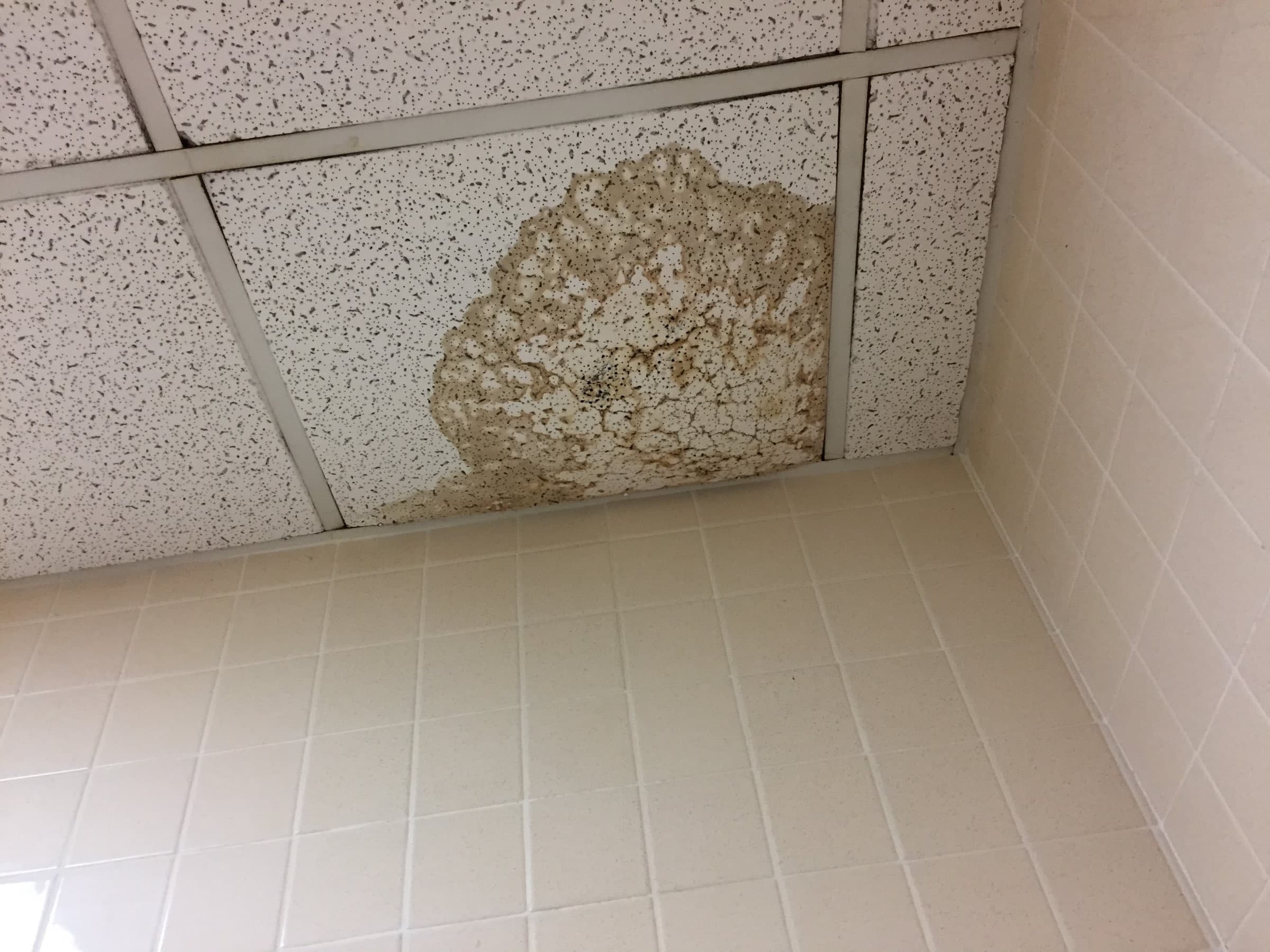
Water damage and mold remediation
Drying out after a leak, mold removed and the room put back, with the source found first.
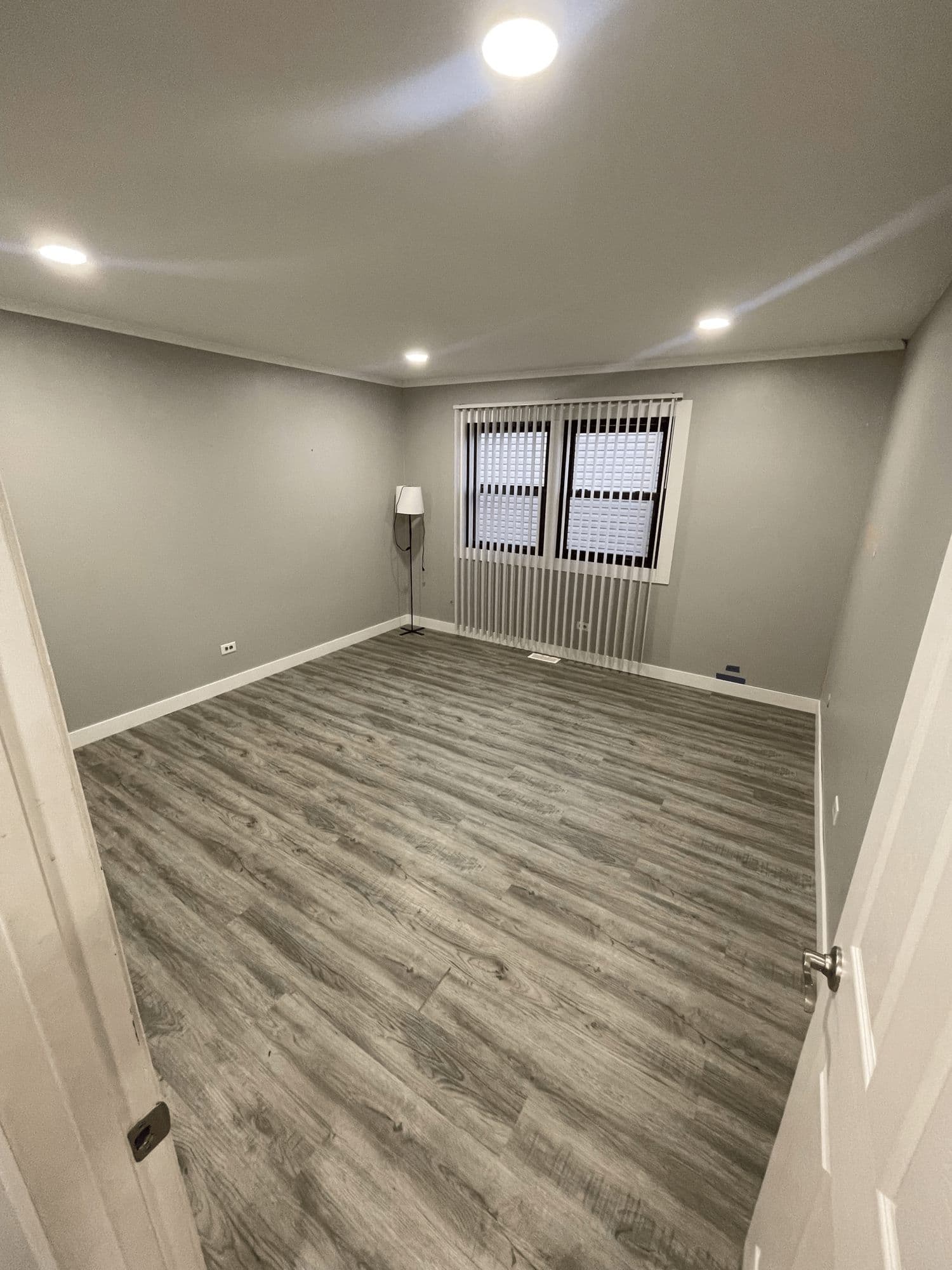
Flooring
Vinyl plank, laminate, engineered wood and tile, over a floor that’s tested and leveled first.
Electrical panel upgrades
A panel and service upgrade from 100 to 200 amps, with the permit and ComEd arranged.
Garage floor coating
Epoxy and polyaspartic coatings, over a slab that’s tested and ground first.
From the blog
All repairs and upgrades articles
Repairs and upgrades · Planning
Can vinyl plank flooring go over basement concrete?
What to check about moisture, slab condition and product instructions before installing vinyl plank on a basement floor.
Water damage, worn floors or walls that need paint?
Tell us what’s going on. We’ll come out, look and give you a written estimate before any work starts.
Someone from our team calls or texts to set up a visit.