
Garage floor coating in Algonquin, Illinois
A coating holds only as well as the concrete under it. We test the slab for moisture and grind the surface before anything goes on, and we coat in the warm months, when the garage is warm enough for the product.
Serving Algonquin, Crystal Lake, St. Charles, Geneva and Vernon Hills.
Signs your garage floor could use a coating
- Oil and fluid stains that won’t scrub out
- Concrete that’s dusty, pitted or flaking
- An old coating or paint peeling up
- Salt and slush tracked in all winter
- You want a floor that’s easier to sweep and mop
What’s included
Each part is done by an insured subcontractor, and the floor is prepared the way the coating’s maker says before anything goes on.
A look at the floor
Its size, its cracks and any old coating or sealer, checked before we price it.
A moisture test
Moisture pushing up through a slab can lift a coating. One polyaspartic maker sets its limit at 3 pounds per 1,000 square feet a day on a calcium chloride test, or 75% relative humidity measured by probes in the slab.
Repairs and grinding
Old coatings and sealers come off, cracks and chipped spots are patched, and the surface is ground or shot-blasted so the coating can grip.
The coating
Epoxy, polyaspartic or both, with color flakes if you want them. In one maker’s tests, its polyaspartic held up well to salt water, motor oil and gasoline.
How it works
- 1
We look at the floor
Its size, cracks, stains and any old coating. That decides the preparation, and the price.
- 2
You get a written estimate
The preparation, the coating and what each part costs. If the moisture test later calls for a moisture-barrier primer, you see that price before it goes on.
- 3
The slab is tested
Close to the coating date, because the moisture in the ground changes with the seasons.
- 4
Repair and grind
Old coatings off, cracks patched, then the surface ground or shot-blasted to the profile the coating’s maker calls for.
- 5
Coating and curing
The base coat, the flakes if you chose them, then the top coat, put down only within the temperature limits on the product sheet.
How it’s priced
We price every garage floor after we’ve seen it, because the preparation depends on what’s there: its size, its cracks and stains, and any old coating that has to come off.
A slab that tests high for moisture can need a moisture-barrier primer first. If yours does, you see that price before it goes on.
What moves the price
- The size of the floor
- Cracks, chipped spots and stains to deal with first
- An old coating or sealer that has to come off
- Whether the slab needs a moisture-barrier primer
- Epoxy, polyaspartic or both, and whether you want color flakes
You get a written, itemized estimate after we’ve looked, and nothing starts until you’ve signed it.
What can happen now, and what waits for warm weather
Any time of year
- Looking at the floor and measuring it
- A written estimate
- Choosing the coating and the color
- Booking a date in the warm months
Once it’s warm enough
- The moisture test, close to the coating date
- Repairs and grinding
- The coating, once the garage is at 50°F or warmer: the minimum one epoxy maker sets for the air, the floor and the coating itself
Why us for this job
Tested before it’s coated
Moisture coming up through the slab can lift a coating from underneath. We test the slab close to the coating date, before anything goes on.
Ground, not just washed
A coating needs a clean, rough surface to grip. Flake-system makers call for old coatings to come off completely and the concrete to be diamond-ground or shot-blasted.
Coated in the right weather
Most garages aren’t heated, and coating makers set temperature limits for the air, the floor and the material. We coat in the warm months, inside those limits.
Questions about garage floor coating
Epoxy or polyaspartic?
It can be both. Epoxy can be the whole coating or the base under color flakes, and polyaspartic is often a clear top coat made to go over flakes. One maker’s polyaspartic takes heavy traffic after 24 hours at 72°F in most versions; the epoxy takes 48 hours at 77°F, and 7 days to cure.
Can you coat a garage floor in winter?
Not in an unheated garage. One maker’s epoxy needs at least 50°F in the air, the floor and the coating, the polyaspartic needs the floor at 35°F or warmer, and both want the floor at least 5°F above the dew point. So we look at the floor and book it in winter, and coat when it warms up.
Will a coating hide cracks?
Small cracks and chipped spots are patched and ground smooth first. A crack or joint that is still moving can show through the coating, as flake-system makers warn. If the slab is heaving or sinking, a coating isn’t the fix, and we’ll tell you so.
What happens to my old coating?
It comes off. Flake-system makers call for old coatings and sealers to be removed completely, then the bare concrete ground or shot-blasted.
Will my tires mark it?
They can. One flake-system maker notes that tire marks may occur, and suggests a small sheet of metal or plastic under parked tires to prevent them.
Related services
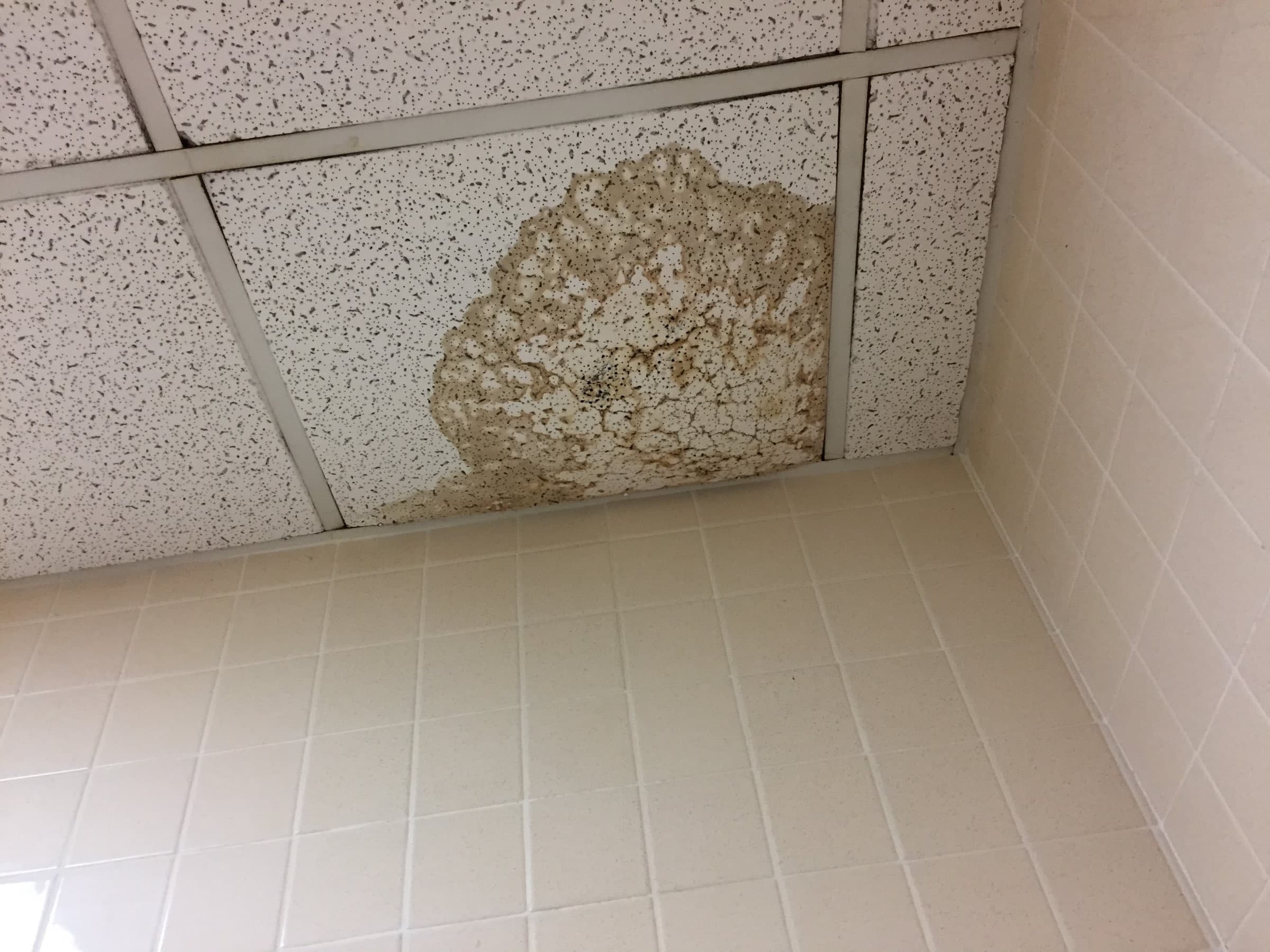
Water damage and mold remediation
Drying out after a leak, mold removed and the room put back, with the source found first.
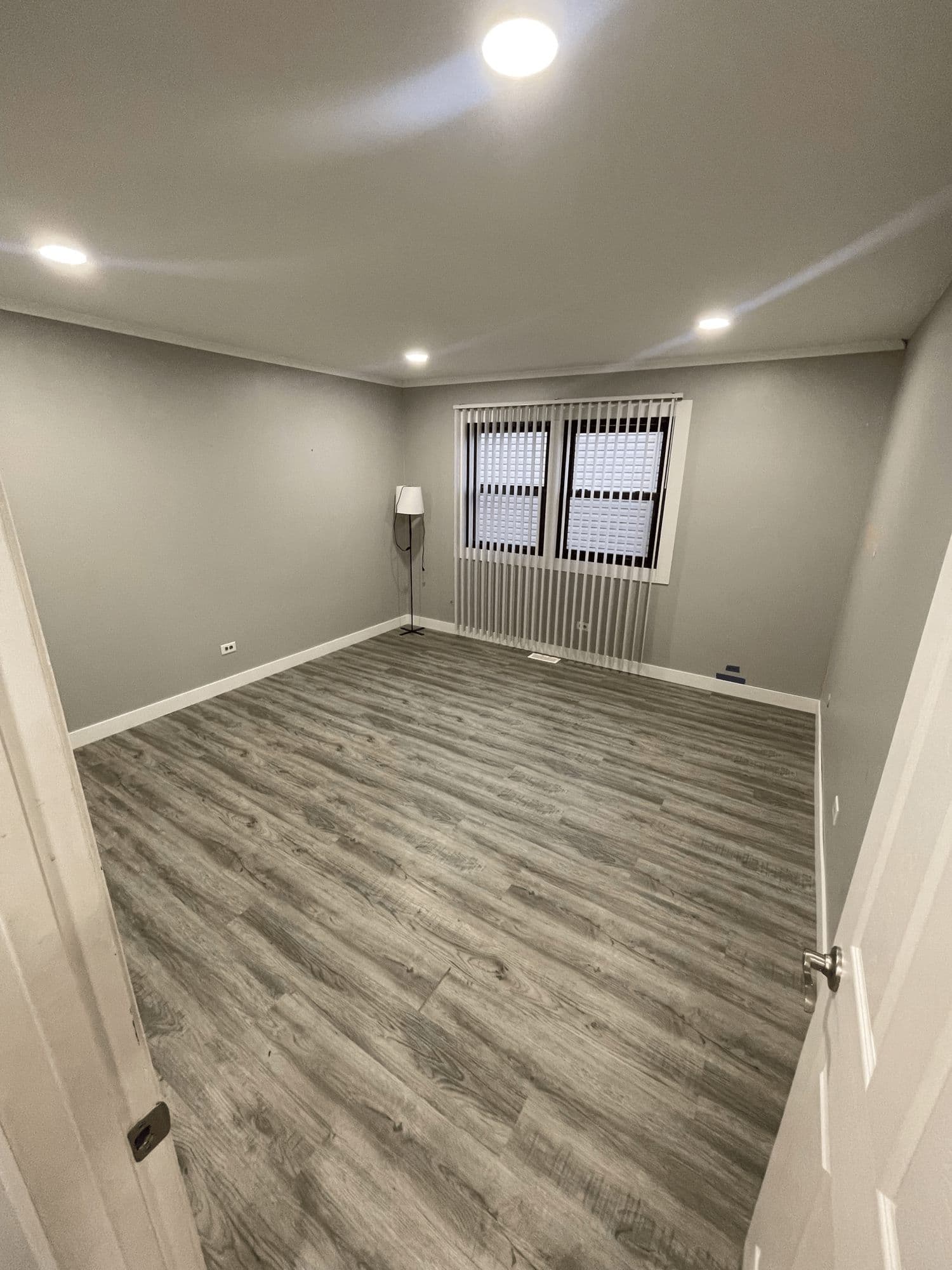
Flooring
Vinyl plank, laminate, engineered wood and tile, over a floor that’s tested and leveled first.
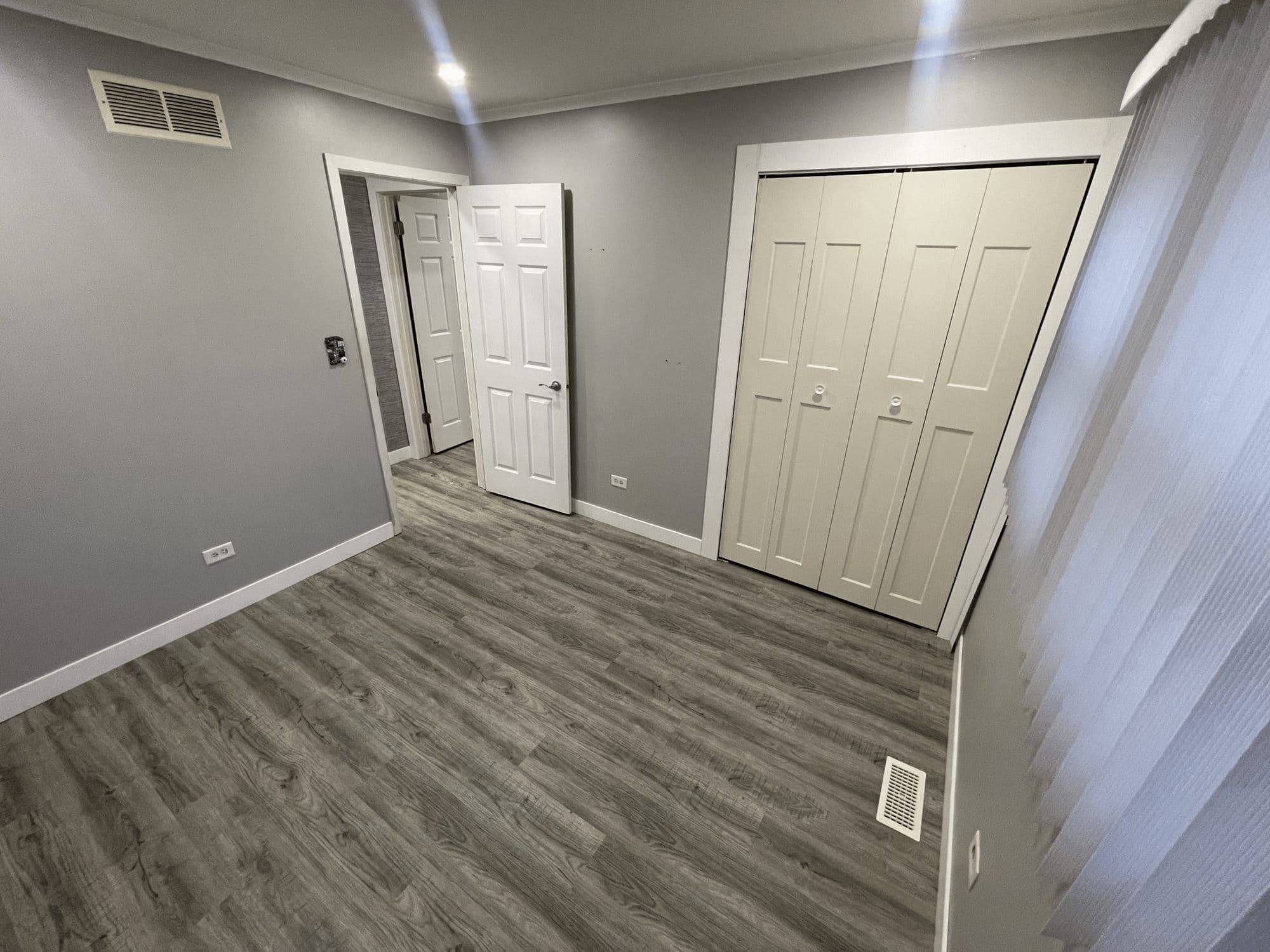
Painting
Walls, ceilings, trim and siding, patched, caulked and primed before the paint goes on.
Electrical panel upgrades
A panel and service upgrade from 100 to 200 amps, with the permit and ComEd arranged.
From the blog
All repairs and upgrades articles
Repairs and upgrades · Planning
Can vinyl plank flooring go over basement concrete?
What to check about moisture, slab condition and product instructions before installing vinyl plank on a basement floor.
Water damage, worn floors or walls that need paint?
Tell us what’s going on. We’ll come out, look and give you a written estimate before any work starts.
Someone from our team calls or texts to set up a visit.