
Gutter replacement in Algonquin, Illinois
Gutters catch the water, and the downspouts decide where it ends up. We look at where every downspout empties before we price new gutters, because that is where many wet basements start.
Serving Algonquin, Crystal Lake, St. Charles, Geneva and Vernon Hills.
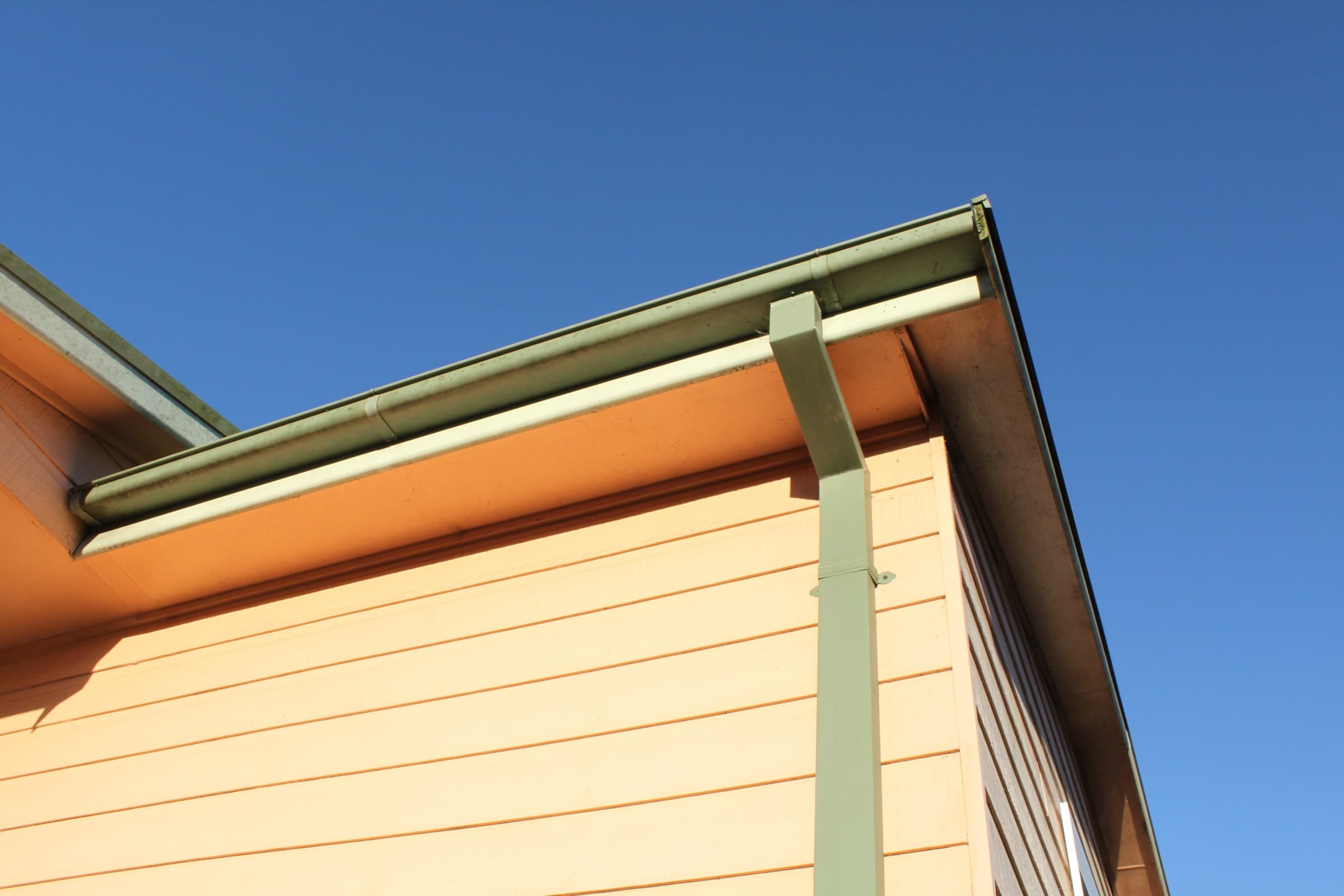
Signs your gutters are due for replacement
- Water spilling over the gutters in a heavy rain
- Gutters sagging, pulling away from the house or dripping at the joints
- Downspouts that empty right beside the foundation
- Water in the basement after a storm or a quick snowmelt
- A trench worn in the soil, or ice building up, under a downspout
What’s included
A gutter only helps if the water it catches ends up away from the house, so the job covers where it goes, too.
A look at where the water goes
Every gutter run, every downspout and where each one empties, and which way the ground slopes around the house.
Seamless aluminum gutters
Formed on site to the full length of each run, so the only joints are at the corners and downspouts.
Downspouts in the right places
At least one for every 50 feet of eave, as University of Minnesota Extension recommends, and none left emptying onto a lower roof, which Algonquin’s code doesn’t allow.
Extensions or splash blocks
Every downspout ends on an extension or splash block that carries the water away from the wall, at least 4 feet out where the yard allows.
Old gutters off
Taken down and hauled away, with the fascia board behind them checked before the new ones go up.
The permit, where your town asks for one
Algonquin requires a permit for gutters and downspouts. We check your town’s rule before we price the job, and the permit is part of it.
How it works
- 1
We look at the water first
Where the gutters overflow, where each downspout empties and whether the ground falls away from the house. If you have water in the basement, this is where we start.
- 2
You get a written estimate
The gutter lengths, the number of downspouts and where each one will empty, and the permit if your town needs one.
- 3
Old gutters down
The old gutters come down, and any soft fascia board is shown to you before it is repaired.
- 4
New gutters and downspouts
Hung with a steady fall toward each downspout, with an extension or splash block at the bottom of every one.
How it’s priced
Gutters are priced by the foot, so the length of your gutter runs and the number of downspouts move the price most.
If there’s water in your basement, check the gutters and downspouts first. They cost far less than interior drain tile, and they may be all your basement needs.
What moves the price
- How many feet of gutter the house needs
- How many downspouts, and how far each has to carry the water
- The size of the gutters and downspouts
- One story or two
- Whether the fascia board behind the gutters needs repair
You get a written, itemized estimate after we’ve looked, and nothing starts until you’ve signed it.
What can happen now, and what waits for spring
Any time of year
- The visit, the measurements and the written estimate
- A date on the calendar for the warmer months
Spring to fall
- Taking down the old gutters and hanging the new ones
- Setting extensions and splash blocks on ground that has thawed
Why us for this job
We follow the water
University of Minnesota Extension says a downspout without an extension or splash block is worse than no downspout at all, because it dumps the water in one spot by the wall. Where each of yours will empty is on your estimate.
Often the smaller basement fix
In a 1-inch rain, about 1,250 gallons fall on the roof of a 2,000-square-foot house, by University of Minnesota Extension’s figures. Without working gutters and downspouts, some of it ends up in the basement.
We say what gutters won’t fix
New gutters don’t stop ice dams, which start with heat escaping into the attic, and they don’t fix ground that slopes toward the house. If either is your problem, we tell you.
Questions about gutter replacement
Can bad gutters cause a wet basement?
Yes. Gutters that overflow and downspouts that empty beside the wall put the water from the roof against the foundation, and much of the ground here drains slowly. University of Minnesota Extension says to put gutters, downspouts and grading right first, because that may solve the problem.
How far should a downspout carry water from the house?
Algonquin’s code says at least 2 feet from the foundation, and University of Minnesota Extension recommends at least 4 feet. We set each one as far out as your yard allows, but we don’t bury downspout lines.
Can a downspout empty onto the sidewalk or the street?
Not in Algonquin: its code bars downspouts from emptying onto a public street, sidewalk, bike path or right-of-way. We plan where each one empties before the gutters go up.
Do I need a permit for new gutters?
In Algonquin, yes: the village lists gutters and downspouts among the jobs that need one. We check your town’s rule before we price the job, and the permit is part of it.
Will new gutters stop ice dams?
No. Ice dams start when heat escaping into the attic melts snow higher up, and the water freezes again at the cold edge. University of Minnesota Extension puts the lasting fix in the ceiling: seal the air leaks into the attic, then add insulation.
What are seamless gutters?
Gutters formed on site from a coil of aluminum to the full length of each run, so there are no joints along the way to drip. The only joints are at the corners and downspouts.
Related services
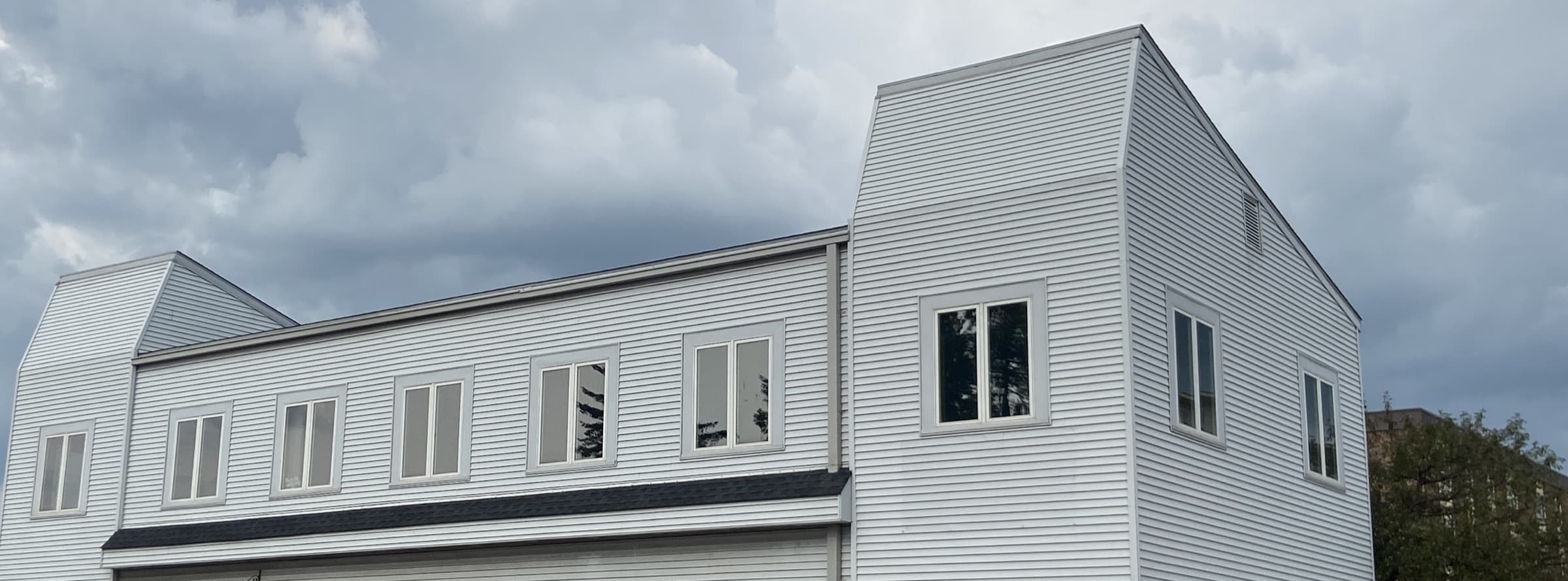
Siding replacement
Vinyl or fiber cement over a new water barrier, flashed at every window and door.
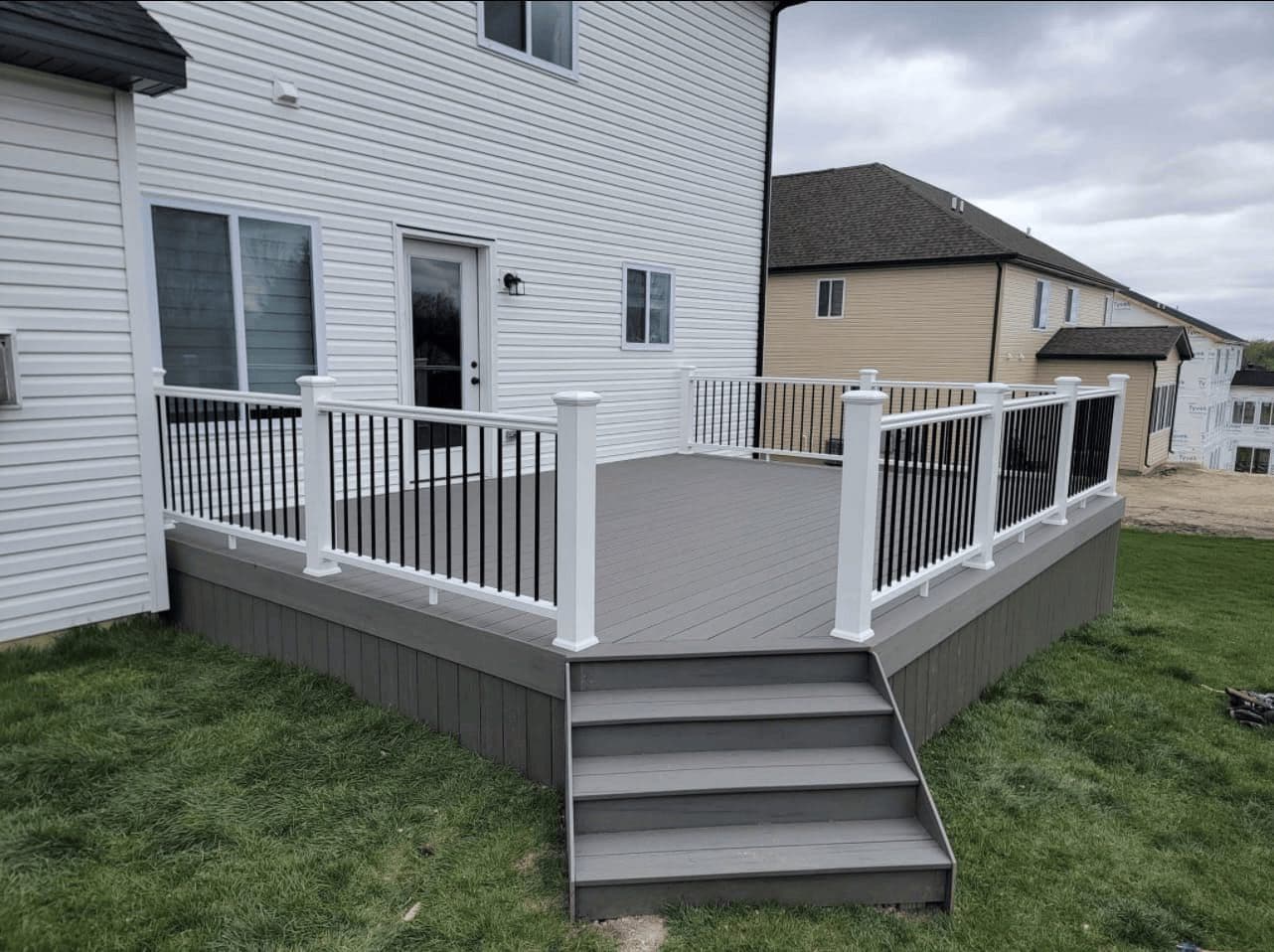
Deck building
Composite decks on a pressure-treated frame, set on footings below the frost line.
From the blog
All exterior articlesExterior · Diagnosis
Gutters overflowing: do they need cleaning, repair or replacement?
What overflow, leaking joints and water near the foundation can tell you, and what to ask before replacing your gutters.
Time to redo the outside?
Tell us what you’re seeing. We’ll come out, look it over and give you a written estimate. Outside work is booked for the warmer months.
Someone from our team calls or texts to set up a visit.