Basements · Comparison
Interior drain tile vs exterior excavation: which fixes a wet basement
Interior drain tile and exterior excavation solve a wet basement in different places, at very different costs. What each one actually does.
Water in the basement raises the same question every time around Algonquin: does this need the yard dug up, or will something inside be enough? The two real fixes are interior drain tile and exterior excavation, and they solve the problem in different places. Here is what each one does, why their costs are so far apart, and how the choice usually gets made.
What each method actually does
Interior drain tile is a perforated pipe set in gravel along the inside of the footing, under the basement floor. It collects water at the joint where the wall meets the floor slab and carries it away before it can spread across the floor. The wall itself stays in the ground; the pipe manages the water that gets past it.
Exterior excavation works from the outside. A crew digs down to the footing along the foundation wall, applies a waterproof membrane or coating directly to the concrete, and often adds a drain at the base before backfilling. It treats the wall itself, not just the water that has already gotten past it.
The practical difference shows up before either job even starts. Interior work stays inside the basement: no landscaping disturbed, no equipment parked on the lawn. Exterior work means a trench along at least part of the house, and the yard needs time to settle once it is backfilled.
Anchor & Beam installs interior drain tile. We do not dig up yards or apply exterior membranes. When a basement genuinely needs that kind of work, that is a different job than the one we do, and we will say so plainly.
What interior drain tile costs, and what it skips
Interior drainage usually costs a fraction of exterior waterproofing, because nothing outside has to be dug up. What moves it most is how much wall needs draining and the condition of the existing floor (This Old House).
Drain tile only manages water that has already reached the floor-wall joint. It does nothing for a gutter that overflows at the wall, a downspout that empties next to the foundation, or a yard that slopes toward the house instead of away from it. The University of Illinois Extension recommends finished grade fall at least 4% away from a foundation (Illinois Extension), and a lot of wet basements turn out to be a grading or gutter problem once that gets checked first.
That is why we look outside before we look inside. Cleaning gutters, extending downspouts and correcting grade cost far less than any waterproofing system, and for some houses that is genuinely all it takes. No drain tile and no digging required.
What exterior excavation costs, and when it is the real fix
Exterior waterproofing costs the most of any fix, largely because of the labor involved in excavating around a foundation (This Old House).
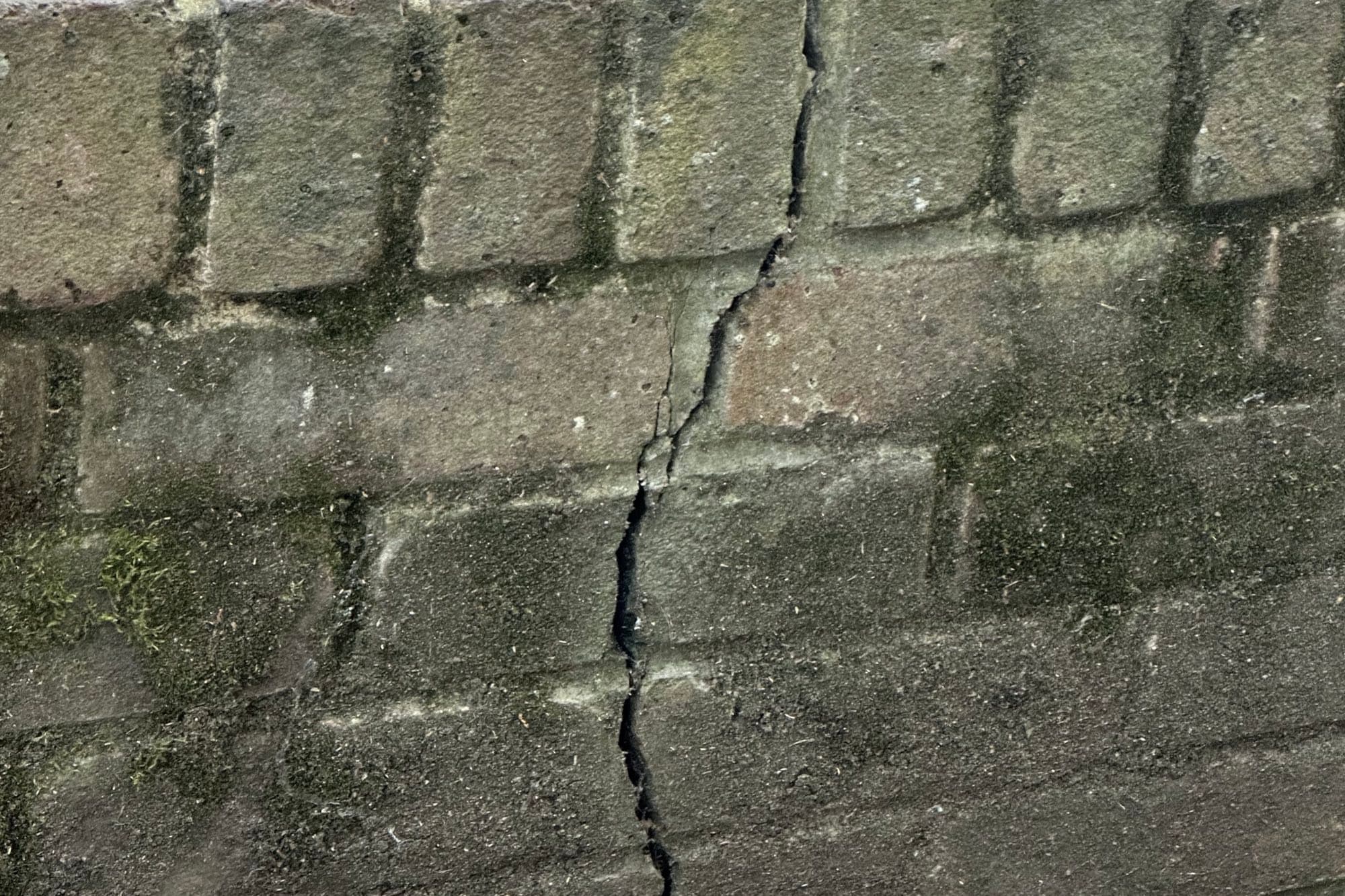
Exterior work earns that cost when the problem is the wall itself, not just water finding its way to the floor. A wall that is visibly bowing, or one where the waterproofing coating applied at construction has failed outright, needs to be addressed from the outside, because soil pressure is acting on the whole wall, not only the joint at the bottom. Interior drain tile can manage the water in a case like that. It will not address the wall.
A single problem wall costs less than waterproofing an entire perimeter, so an honest number depends on the actual scope, not a whole-house average.
How frost changes the timeline
Interior work can happen any time of year, including the middle of winter. Exterior excavation cannot. Frost commonly runs 10 to 20 inches deep across Illinois in an ordinary winter, and has been recorded as deep as 30 inches in the far north of the state (Illinois State Climatologist). Frozen ground is not practical to excavate, so exterior work waits for it to thaw each spring, regardless of how an estimate visit goes in January.
What the ground here points to
Much of McHenry and Kane counties sits on glacial till: silty soil over dense, clay-rich subsoil that drains slowly. Some of the most common local soils, such as the Ozaukee series, hold a perched water table 2 to 3.5 feet below the surface for a month or more in most years (USDA soil survey). Soil that holds water that close to the surface keeps pushing on a foundation long after a storm has passed, which is exactly the kind of steady pressure interior drain tile is built to manage at the joint. That is one reason interior work is the more common fix in this area. It is not evidence that exterior work is never the right call.
How the first visit decides it
The only way to know which one a specific basement needs is to look at it: where the water is showing up, what the wall looks like, and what the gutters and grade are doing outside. That is not a sales pitch for the more expensive option; most of the time it points to the cheaper answer, or to no waterproofing system at all. We check all of that before we recommend anything, on the same visit where we measure rather than guess. If gutters and grading turn out to be the real cause, that gets said too, even though it is the smaller job.
Foundation cracks are their own version of this question, especially the ones that show up or get worse over winter. See can foundation cracks be fixed in an Illinois winter for how that timing actually works.
If you are seeing water and want someone to look at your specific basement, tell us what’s going on.